

Most of fall’s leaves are out of the water, tannins are dropping, and the water is clearing up into winter’s beautiful gin-clear clarity. We’ll see this clear water, outside of
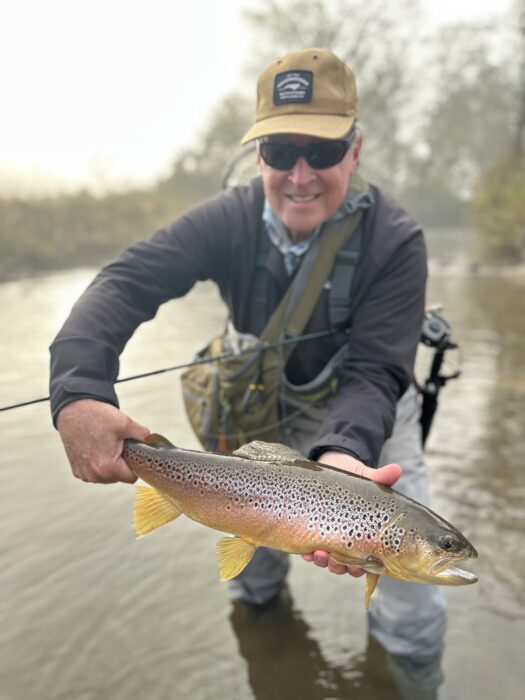
Sight fishing browns in western north Carolina
weather events, through spring of 2026. Don’t slump on late fall, deep winter, and early spring’s great fishing… less people, hungry fish!
With lower water conditions until further notice, think less is more. It’s not taking big flies to get these fish to eat — lot of small bugs on the water lately.
However, our guides have been getting their clients’ hands on big and little trout across the French Broad River fishery—including the Tuck, Davidson, DuPont, Forks of the French Broad and alike—using just about every method available: from buggers being stripped in, to dancing dry-fly caddis, stones, midges, blue wings, and a wide variety of subsurface nymphs like girdle bugs, eggs, beatis, hare’s ears, and prince nymphs.
One of our guides, Brett Meany, said at a team dinner the other night: ”There’s only one bug that comes out all the time and that’s the Blue Wing Olive.” Keep that in mind.
If you’re new to fishing, now is a great time to get after some fish on the state-stocked Delayed Harvest (DH) waters. Waters like the East Fork of the French Broad and Little River in DuPont State Forest are packed with fish! Have fun and throw, tap, strip, dab, drift and plop flies to get easier bites—they’re hungry! Classics like worms, eggs, and larger rubber-legged nymphs can still carry a full day. Don’t be scared to drop tippet size or go more technical when they get picky. Remember what Brett said… a stonefly-to-BWO nymph combo is a great rig on most days. Oh, and what trout can resist a plump egg or San Juan worm? Throw that junk!
Even on DH, for an experienced angler it’s still a fully rounded day picking fish off as they sip size 20 BWOs, micro-caddis, and slide out from under rocks to crush the early-winter black stoneflies. If you’re a blue-line junkie looking to chase selective wild fish, they’re very happy right now too. Get to your favorite line and try some smaller nymphs like perdigons, Duracell CDC nymphs and smaller stones. (Use the NC PAWS interactive map to find your closest designated waters!)
Weather is all over the place—hot and cold days one after the other—forcing water temps in and out of the 40°–50° range. As discombobulating as it can be to both fish and angler, the fish seem stable and eating. Remember: if it’s a warm morning, start fishing right after that cup of coffee; if it’s cold, don’t be afraid to get a little later start and let the sun bring out some late-afternoon bites.
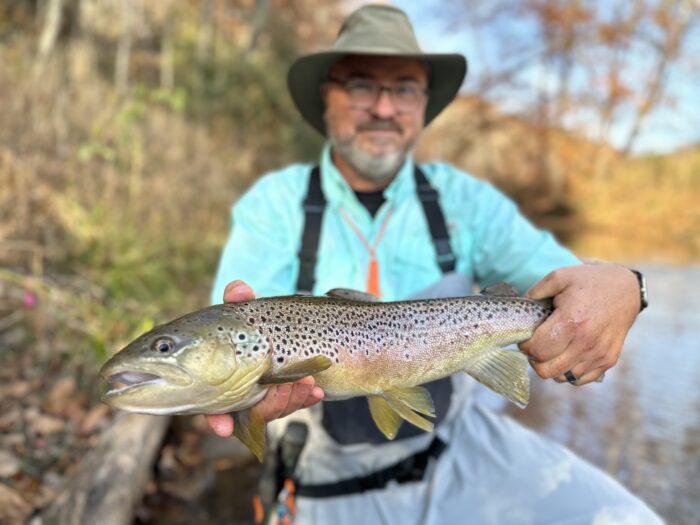
Guided Fly Fishing Trips in Brevard NC
As winter settles in…
Expect trout to continue sliding into soft edges, tailouts, mid-river trenches, and any bucket with a little depth. You’ll see this the most once water cools off and evens out into lower 40 temperatures. Fly selection needs to go smaller, darker and drifts go slower, and good presentations matter more than ever. It’s fun, it’s technical — embrace the cold! Tiny midges are a must (18–22), zebra midges, WD-40s, and thread-body emergers become the flies. Don’t sleep on attractors, either: small micro eggs (2-4mm), micro rubber-legs, and bright hotspot nymphs can still turn heads in cold, clear water. The Davidson can be a great winter fishery to accomplish technical dry fly fishing and Nymphing. A day with a guide out there can flatten the learning curve tremendously!
Streamer folks can keep having fun, just downsize the menu. Think baby sculpin or slump busters, bead headed olive or black buggers, and small articulated patterns fished slow using small strips and low presentation. Keep that tip down as you strip and follow the fly! A little cloud cover or a warm midday window can fire up a surprising big-fish chase. When all else fails, put a bugger on.
Dry flies won’t disappear, in fact, will ramp up—winter midge hatches and blue-wing olives will keep popping off heavily, especially on overcast days. Have a few CDC midges, tiny parachute BWOs, classic Adams and simple emergers ready. All small! These all can be found in our bins at the shop if you need to come see some examples. You won’t need many, or maybe you will, but when the trout noses come up, you’ll be glad you packed them. Light tippet, small flies, tight casts!
Overall, winter inside the French Broad River basin is a good time: clear water, predictable trout, and quieter rivers. Layer up, slow things down, and enjoy one of the most underrated seasons of the year.
Tight lines and stay warm out there!
Give the Gift of Adventure this Holiday Season- Purchase an Gift Card!